LISA L. WEI, MD, PC
PEDIATRIC OPHTHALMOLOGY
LISA L. WEI, MD, PC
PEDIATRIC OPHTHALMOLOGY
3801 N. Fairfax Drive, Suite 64
Arlington, Virginia 22203
Phone: 703.528.8899
Fax: 703.528.5688
Contact Lenses
Children are generally capable of wearing contact lenses beginning at 12 years of age, depending on the child’s motivation and level of maturity. Some children may start earlier, and others must wait until later. We are happy to fit your children with contacts when appropriate. We use soft disposable and soft toric (for astigmatism) lenses.
Contact lens fitting is a process that involves measuring the prescription, trying on lenses, evaluating the fit and vision, and teaching their proper use and care. This can often be done in one visit but may require additional evaluations and follow-up visits depending on the patient. Once the patient begins wearing lenses, Dr. Wei requires rechecks within the first 3 months to ensure proper fit and vision.
Because the process of correct fitting and evaluation of contact lenses can be time consuming, we ask that you let our receptionist know that you are interested in this service when you schedule your child’s appointment. If your child is wearing contacts that have been fitted elsewhere, please bring a copy of the current contact lens prescription and have your child wear (or bring) the contacts to the office visit so that we can properly evaluate the lenses.
Pediatric Strabismus
Pediatric strabismus is the condition where the eyes are misaligned. Ocular misalignment is a commonly seen problem in our practice. Different types of strabismus include crossed eyes (esotropia), out-turned eyes (exotropia), and vertical misalignment (hyper or hypotropia). Strabismus may occur in early infancy (congenital or infantile) or may appear later (acquired). The condition may be present intermittently or constantly. Misalignment that resolves spontaneously prior to 6 months of age may be normal, especially in premature babies. Misalignment beginning after 6 months of age is not usually normal.
Strabismus may be an isolated finding or may be associated with other general medical conditions, like Down Syndrome.
Children with strabismus may complain of ocular discomfort, headache, blurred vision, or, less commonly, double vision. Parents may notice misaligned eyes, closure of one eye in bright sunlight, abnormal head posture (torticollis), or reading aversion.
Treatment of pediatric strabismus varies depending upon the type of strabismus and particular circumstances of each patient. Glasses, prism lenses, and/or surgery may be required to improve ocular alignment. Combinations of these therapies are often employed. Patching is NOT a treatment for strabismus (see Amblyopia below).
Strabismus Surgery
Surgery to realign eyes is often needed in children and adults. To accomplish this type of surgery a small incision is made into the clear tissue (conjunctiva) covering the white of the eye. Through the incision, the muscles are detached, repositioned, and re-attached with sutures. The direction and degree of misalignment determine which muscles are operated on and how far they are moved. Surgery may be needed on one or both eyes. Absorbable sutures are used so that stitches do not need to be removed.
Most patients recover quickly from strabismus surgery and are able to return to normal activities within a few days. Post-operative care usually requires that cold compresses and antibiotic ointment be used for a few days.
Eye muscle surgery usually requires general anesthesia and is done at a hospital or surgery center.
Amblyopia
Amblyopia is decreased visual acuity in an eye. It is the result of deficient visual development in that eye in children under age eight. Amblyopia is most commonly caused by strabismus (ocular misalignment) or by anisometropia (unequal eyeglasses requirements for the two eyes). If this happens in early childhood, the visual development of one eye will lag behind, sometimes to a very dramatic degree, resulting in very poor vision in that eye.
Treatment consists of allowing both eyes to be used simultaneously and forcing the non-preferred eye to be used preferentially until vision normalizes. If the glasses requirements are unequal, proper eyeglasses are prescribed for full-time wear. Similarly, if the patient previously has not worn glasses but glasses are needed to improve ocular alignment, they will be prescribed at this time.
Once glasses are being worn, “penalization” treatment is begun. Covering or blurring the preferred eye is done on a part- or full-time basis. Occlusion by patching is most common and seems to work more quickly but blurring with daily Atropine eye drops can also be very effective. Although prescribed treatment usually improves vision, poor compliance can be a significant obstacle to long term success.
If a medical condition such as ptosis (droopy eyelid), cataract, or strabismus not responsive to glasses, is the underlying cause of the amblyopia, surgical correction of these problems is essential to achieving and maintaining good vision.
Nasolacrimal Duct Obstruction
Nasolacrimal Duct Obstruction (blocked tear duct) is a very common problem in early infancy. Ordinarily, tears are produced beneath the upper eyelids, wash across the eye and drain into small openings in the nasal portion of the upper and lower eyelids (punctae). Beneath the surface there is the drainage system that carries the tears into the back of the nose. The main part of this system is the nasolacrimal duct. Frequently, the bottom of the duct does not open completely at the time of birth. When this occurs, tears can back up and run down the cheeks instead of draining as they should. In addition, tears sitting in the nasolacrimal duct are an excellent medium for the growth of bacteria. When this happens, a yellow or green discharge can be seen in the tears or collecting on the eyelids.
About 50% of partial nasolacrimal duct obstructions clear spontaneously by one year of age. If there is no significant improvement in the symptoms by this age, probing and irrigation, a brief surgical procedure, should be considered. In older children, more complex surgical procedures may be needed. While waiting for the problem to resolve, the intermittent use of antibiotic drops or ointments can reduce the volume of discharge, making parents and babies happier.
Chalazion
A chalazion is a lump in the eyelid that is caused by blockage and inflammation of a gland within the eyelid skin. As the gland produces more oil, the lump grows over days to weeks and is often red, warm and/or painful. In some cases, the chalazion may rupture and drain spontaneously without treatment. If the chalazion lasts for more than a couple of weeks or returns, your ophthalmologist may recommend examination and/or surgery to remove the chalazion.
Retinopathy of Prematurity
Retinopathy of Prematurity (ROP) is a disease of the retina seen in premature, low birth weight infants. Low birth weight, gestational age at birth, and oxygen exposure are risk factors for the development of ROP but the precise cause is unknown. Most cases are mild and resolve without treatment. Occasionally the disease progresses and laser treatment is needed to prevent severe complications, including loss of vision and blindness. Babies are usually examined in the neonatal intensive care unit (NICU) for ROP and are rechecked after discharge if their particular situations warrant such care.
Babies born prematurely, including those with mild, resolved ROP, have a higher risk of needing glasses as children and of developing strabismus than comparable full-term babies.
Pediatric Cataract
A cataract is a cloudiness or opacification in the normally clear lens of the eye. Cataract is normal in the aging eye. Congenital cataracts and acquired cataracts of childhood are uncommon, but they do occur. Depending on a variety of factors, sometimes early surgery is required. On occasion the cataracts are mild and only need close observation. If surgery is required to remove cataracts, glasses, contact lenses, or intraocular lenses will be necessary to correct the postoperative vision. Recent experience has shown that many young children who have cataract surgery do well with intraocular lenses and can avoid the often difficult use of cataract glasses or contact lenses.
Pediatric cataracts may be associated with systemic metabolic or genetic disorders or may be isolated findings in otherwise healthy children.
Ptosis
Ptosis is the droopiness of one or both upper eyelids caused by a weakness in the muscle that raises the lid. Children who have ptosis are usually born with the condition. The droopiness may be very subtle or may dramatically cover the eye so that vision is severely impaired, if not completely obstructed. Sometimes the eyelid droops enough to cover the pupil while allowing part of the eye to be visible. Visual development will be affected adversely and treatment is needed. Ptosis can be managed with patching or with glasses to improve or maintain vision but its correction requires surgery. Surgery is often recommended in early infancy but may be delayed until later in childhood if the visual development is judged to be adequate. Mild degrees of ptosis which are not visually significant can be treated with restorative surgery after five years of age.
Congenital Glaucoma
Congenital glaucoma is an uncommon disease characterized by elevated pressure in one or both eyes at birth. Uncontrolled pressure can damage the optic nerve and retina, leading to decreased vision or blindness, in the worst case. Congenital glaucoma is usually manifest by a cloudiness and enlargement of the cornea. This is often accompanied by tearing and light sensitivity.
The treatment of congenital glaucoma requires surgery as soon as possible. The goal of treatment is to normalize the eye pressure and often is accomplished through a combination of surgery and medications.
Dyslexia and Learning Disorders
Dyslexia is a specific type of learning disorder that manifests as difficulty in reading by children with otherwise normal intelligence and sociocultural opportunity. Reading is a complex function that involves integrating multiple factors related to an individual’s experience, ability, and physical makeup. Although some children do not read well because they have trouble seeing, research has shown that most children with reading difficulties experience a variety of language defects that stem from complex brain function. Reading difficulty is not due to altered visual function per se.
Parents, teachers, and pediatricians are often the first to identify dyslexia or learning disabilities in children. Dr. Wei sees many children who are identified and referred by parents, teachers, and pediatricians. Evaluation by the pediatric ophthalmologist is important to detect and treat any refractive errors (requirements for glasses) or eye muscle imbalance which could add to the child’s educational difficulties.
Eye defects, subtle or severe, do not cause reversal of letters, words, or numbers. No scientific evidence supports claims that the academic abilities of dyslexic or learning disabled children can be improved with treatment based on vision therapy, “neurological organizational training,” or tinted and colored eyeglass lenses.
Early remediation of reading difficulties based on intensive one-to-one tutoring and a balanced reading program seems to work best. Training in reading should be supplemented with enrichment activities to foster language development. The consensus among scientific investigators is that there is not substitute for direct remedial instruction in reading.
Conditions We Treat


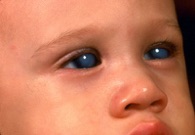

Our practice provides full-spectrum eye care for children from birth to age 18 years. Dr. Wei is experienced in examination, medical treatment, and surgery for the wide variety of ophthalmologic problems that occur in patients in this age group.
Vision Evaluation For Glasses
Children may need glasses for several reasons -- some of which are different than for adults. Many of the children Dr. Wei sees are referred to the practice because they have unclear vision or have failed a vision screening at school or in their pediatrician’s office. Examination of children at any age allows us to determine if a refractive error -- nearsightedness (myopia), farsightedness (hyperopia), or astigmatism -- is present. Dr. Wei will also verify that more serious causes of blurred vision are not present. Because a child’s vision system is growing and developing, especially during the first 5-6 years of life, glasses may play an important role in insuring normal vision development. If it is determined that a child needs eyeglasses, she will provide a prescription for glasses and instructions for their use. We require that all lenses be fabricated from polycarbonate which is very shatter-resistant.